
What is atopic dermatitis?
Atopic dermatitis (AD), also known as eczema, is a chronic inflammatory skin condition. It is caused by a combination of factors, including genetics, immune system imbalance, environmental triggers, and a weakened skin barrier.
In recent years, research has also shown that the microbiome — the community of microorganisms living in and on our body — may play an important role in AD.
Microbiome and AD
Both the skin microbiome and the gut microbiome interact closely with the immune system. When these microbial communities become imbalanced, a condition called dysbiosis, inflammation and skin symptoms may worsen (Hou et al. 2025).
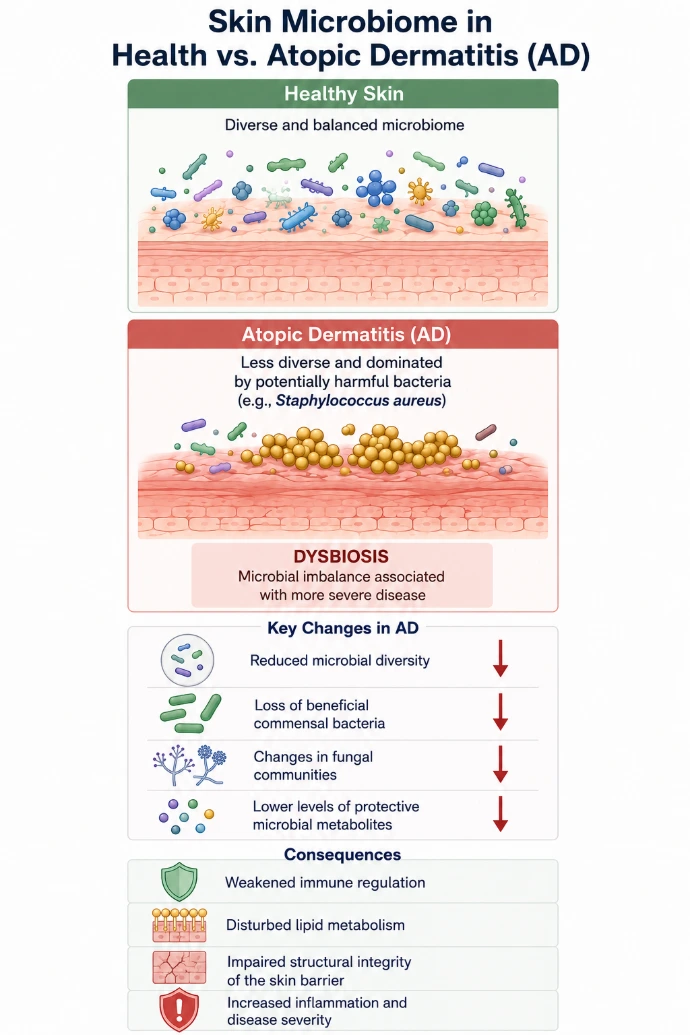
What happens on the skin?
In people with AD, the skin microbiome is often less diverse and increasingly dominated by potentially harmful bacteria, especially Staphylococcus aureus.
At the same time:
- beneficial bacteria may decrease,
- fungal communities may change,
- and protective microbial metabolites may become less abundant.
These changes can weaken the skin barrier, disrupt immune balance, and increase inflammation, making symptoms more severe (Hou et al. 2025).
What happens in the gut?
The gut microbiome also appears to influence skin health through the so-called gut–skin axis.
Many people with AD have:
- lower levels of beneficial bacteria such as Bifidobacterium, Lactobacillus, and Faecalibacterium,
- and higher levels of potentially harmful bacteria.
Gut dysbiosis may weaken the intestinal barrier (“leaky gut”), allowing inflammatory compounds to enter the bloodstream and contribute to skin inflammation.
As a result, inflammation in the gut and skin may reinforce each other, creating a cycle of ongoing inflammation and microbial imbalance (Hou et al. 2025).
Why target the microbiome?
Restoring microbial balance in the gut and on the skin may offer new therapeutic opportunities for AD.
Unlike treatments that mainly suppress symptoms, microbiome-based approaches aim to support:
- long-term immune balance,
- barrier integrity,
- and a healthier microbial environment.
Research has shown that prebiotics and probiotics may:
- increase microbial diversity,
- promote beneficial bacteria,
- and reduce potentially harmful species.
A healthier microbiome can also produce more beneficial metabolites, including:
- short-chain fatty acids,
- tryptophan-derived metabolites,
- and secondary bile acids.
These compounds help regulate inflammation, strengthen barrier function, and support immune homeostasis.
How can human milk oligosaccharides help?
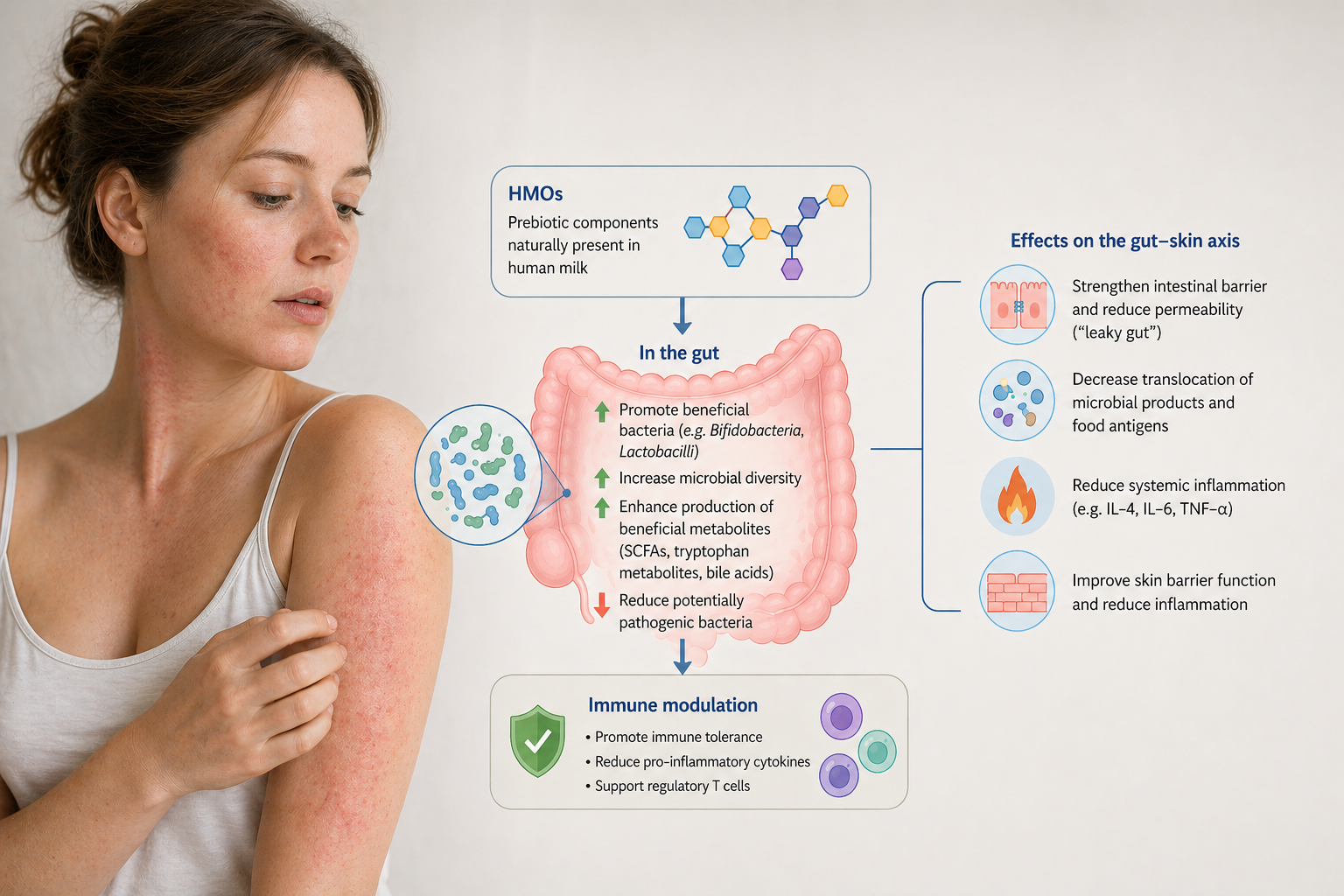
Human milk oligosaccharides, or HMOs, are complex prebiotics naturally found in human milk.
They are not digested by the body, but instead reach the gut where they selectively nourish beneficial bacteria, especially Bifidobacterium.
Human-identical Milk Oligosaccharides (HiMOs), produced through fermentation, may help:
- support beneficial gut bacteria,
- increase protective microbial metabolites, such as short-chain fatty acids,
- strengthen the intestinal barrier,
- reduce pathogen adhesion,
- and support immune tolerance.
Through these effects, HMOs may help restore microbial balance, reduce systemic inflammation, and indirectly support skin barrier function.
Therefore, HMOs represent a promising microbiome-targeted approach for AD. By supporting gut barrier integrity, beneficial microbial activity, and immune regulation, they may become a valuable addition to current AD management strategies.
Although preclinical studies have shown encouraging results, more well-designed clinical studies in adults with chronic AD are still needed.
References
Hou, Binbin, Huijia Shao, Donglin Yuan, en Elizabeth Huiwen Tham. 2025. “Skin and gut microbiome in atopic dermatitis: Mechanisms and therapeutic opportunities”. Pediatric Allergy and Immunology 36 (12): e70265. https://doi.org/10.1111/pai.70265.